How security sensors work, how they can be beaten, and how good design closes the gap
No single sensor is unbeatable. The honest answer to "can an alarm be defeated?" is yes — which is exactly why sensor selection, placement, and layering matter more than any one device.
Let's be honest about what a sensor can and can't do
Anyone selling a security system as "unbeatable" isn't being straight with you. Every sensor technology has a known limitation, and a patient, informed intruder can work around any single device given enough time and knowledge. That's not a reason to skip a security system — it's the reason our job, after 30 years in business, is designing systems where getting past one sensor still leaves several more in the way, and where the whole system is put together well enough that defeating it takes far more time, skill, and risk than most intruders are willing to spend.
The sensors, the technology, and the known workarounds
Door & window contacts
A reed switch and magnet mounted on the frame and the door or window. Separate the two — by opening the door — and the circuit breaks, triggering the zone.
Known workaround
A strong external magnet held near the switch can sometimes hold the reed closed while the door is opened, tricking the sensor into reporting "closed." Proper contact placement, tamper-resistant hardware, and pairing contacts with interior motion coverage close this gap.
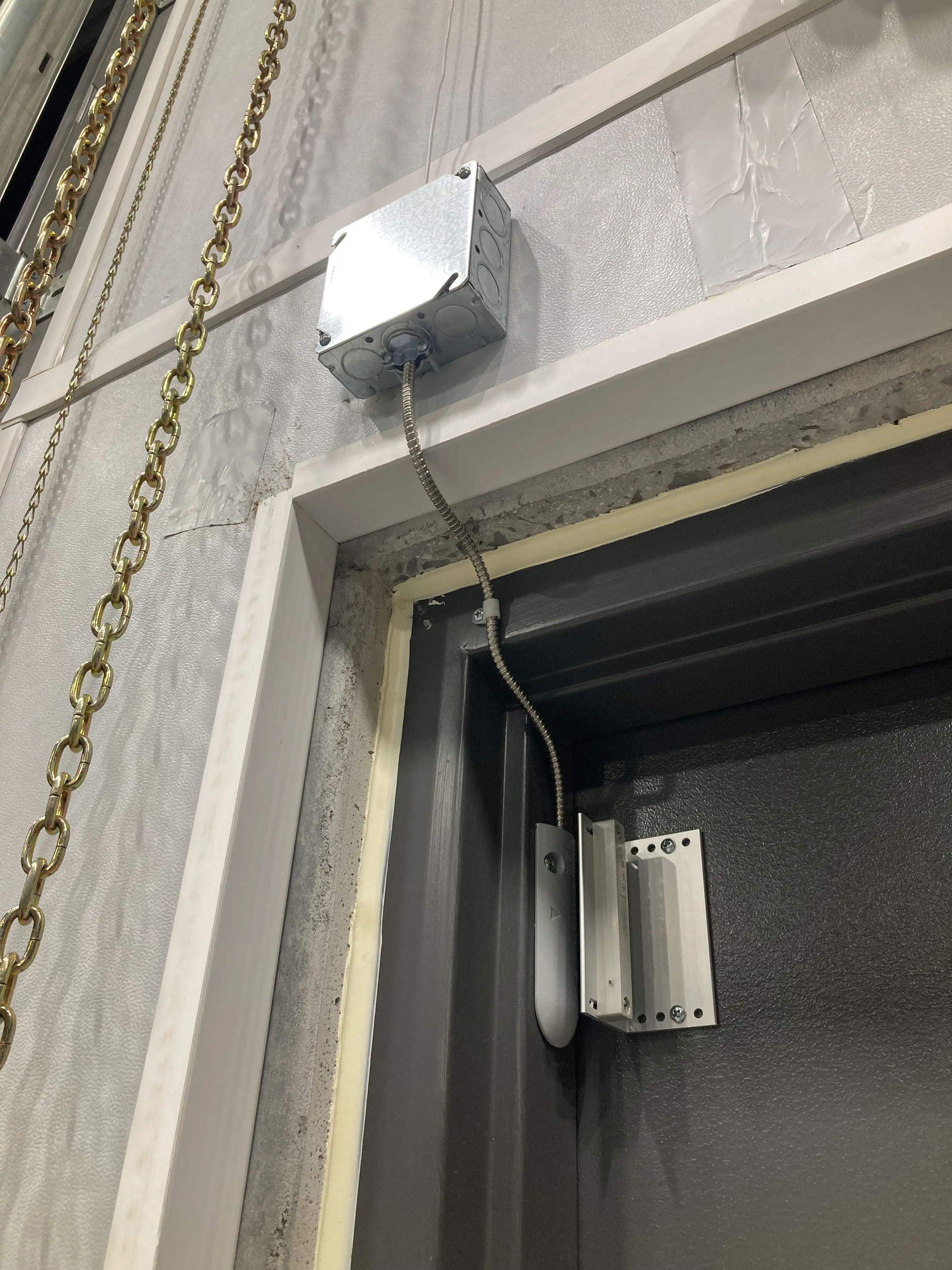
A Potter ODC-59 overhead door contact used on a warehouse exit door because it's strong and more reliable than standard door contacts.
Motion detectors (PIR)
Passive Infrared sensors detect the change in infrared (heat) energy as a warm body moves through their field of view.
Known workaround
Very slow movement, or a thermal barrier held in front of the body, can in theory reduce the heat signature enough to avoid triggering some detectors. Correct placement, sensitivity tuning, and dual-technology (PIR + microwave) detectors that require two triggers instead of one substantially close this gap.
Glass break detectors
Acoustic sensors "listen" for the specific frequency signature of glass shattering, distinct from ordinary background noise.
Known workaround
Techniques that quiet the break, like scoring and slow-cracking the glass, or applying tape or film before impact, can reduce the acoustic signature the sensor is listening for. Correct detector placement and range, and pairing glass break coverage with door/window contacts and motion sensors on the same opening, closes this gap.
Photobeams
A transmitter and receiver create an invisible infrared beam across a doorway, hallway, or perimeter line. Breaking the beam triggers the zone.
Known workaround
A single beam at one height can potentially be stepped over or crawled under. Stacked, multi-beam configurations across the full height of an opening close this gap, and are typically reserved for higher-security perimeter applications rather than every doorway.
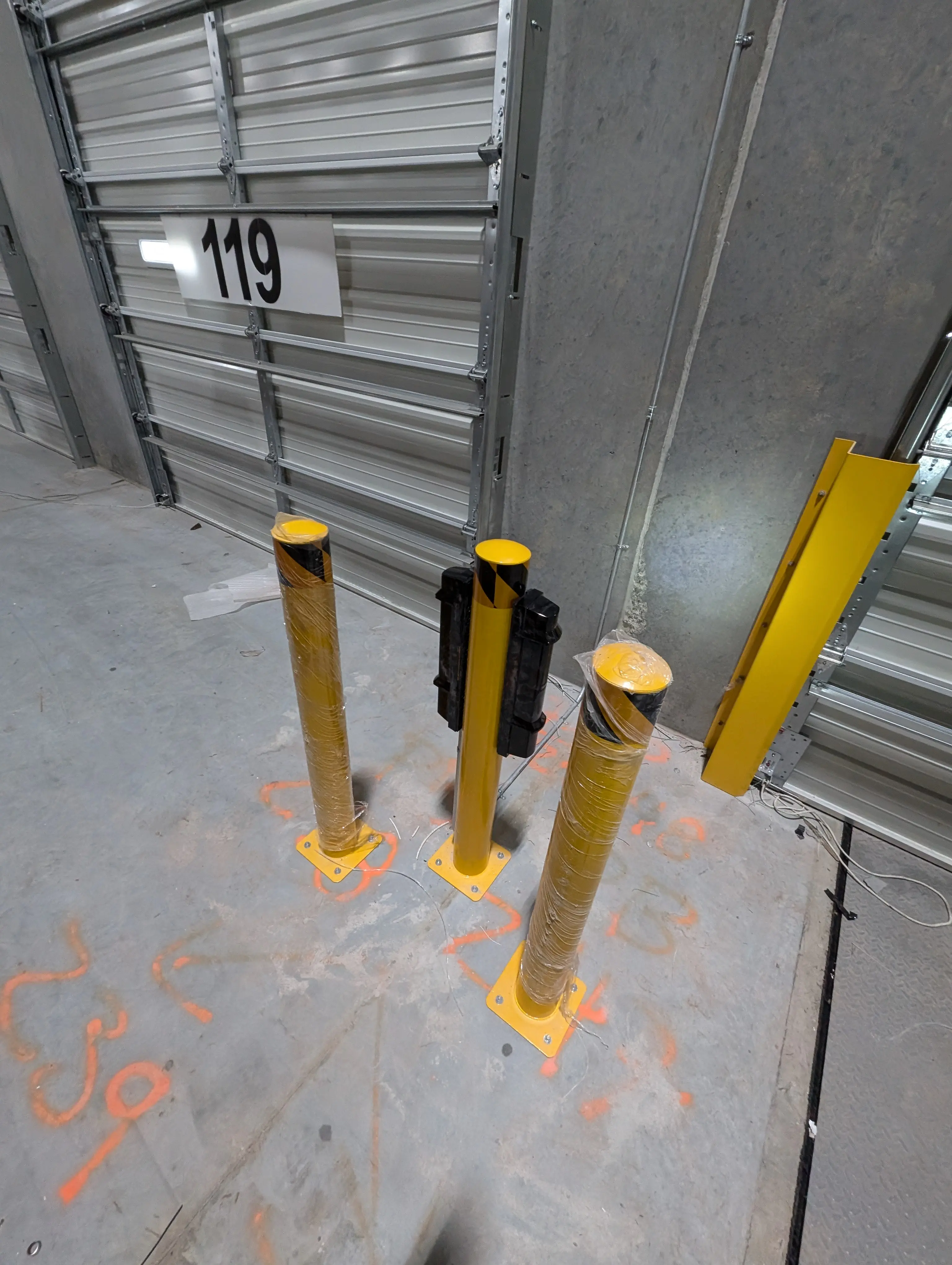
2 Optex SL-650QDP photobeams pointing in opposite directions to cover loading dock doors spanning over 1,000 ft wide.
An alarm system is one layer, not the whole plan
A well-designed alarm system is one layer of protection, not the entire strategy. Cameras add visual verification and a deterrent effect of their own. Physical barriers — solid-core doors, security film on glass, exterior lighting, locking hardware — raise the time and effort needed just to get to the point where a sensor comes into play at all. The strongest security posture combines detection, deterrence, and physical hardening together, rather than relying on any single layer to do all the work.
Good, better, best: three levels of alarm system coverage
GOOD
Essential entry coverage
Our most budget-conscious setup: contacts on the 1–2 most likely entry doors, plus interior motion detectors covering the main pathways an intruder would need to cross. Solid protection for the doors and hallways that matter most.
BETTER
Full door coverage + glass break
Contacts on every exterior door, motion detectors covering interior pathways, and glass break detectors added to cover windows and glazed openings that door contacts alone can't see.
BEST
Full perimeter and interior coverage
Every door and window covered, motion detection throughout, glass break coverage on all glazed openings, and photobeams added across key perimeter lines or high-value openings for an added layer of detection.
Every property is different, and the right tier depends on your building's layout, what's inside it, and your budget. We provide a custom, on-site consultation and written quote for every job.
Not sure which tier fits your property?
Use our free security alarm system cost calculator to get an instant ballpark estimate — no signup, no obligation.
Try the Free Cost Calculator →
Want more protection?
Cameras add visual verification and deterrence on top of alarm detection. Learn more about camera monitoring for your property.
Learn About Camera Monitoring →
Ready to see what the right tier looks like for your property?
30 years of designing systems that don't just check a box — they're built to hold up. Get a free, no-obligation consultation and quote.